
What Is garrment spec sheet?
A MUST-HAVE BLUEPRINT TO CREATE A PERFECT GARMENT PRODUCT
Fashion brands across global markets constantly seek ways to improve product quality and streamline production. Whether you run a startup label or manage an established apparel business, understanding a garment spec sheet plays a critical role in achieving consistent results.
Moreover, a well-structured spec sheet allows manufacturers, designers, and production teams to stay aligned throughout the entire process. As a result, brands can reduce errors, improve efficiency, and deliver high-quality garments that meet international standards.
In simple terms, a garment spec sheet works as a complete production blueprint that defines every detail of your product, from materials to measurements and finishing.
Table of Contents
WHAT IS A GARMENT SPEC SHEET AND WHY IT MATTERS IN GLOBAL APPAREL PRODUCTION
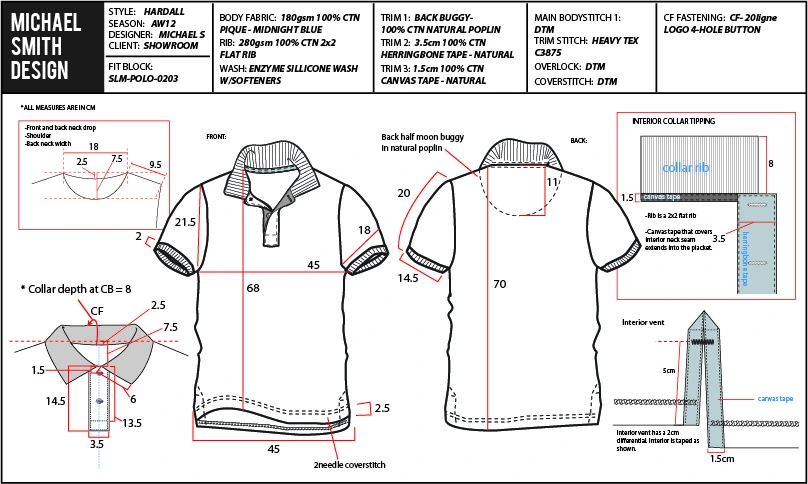
A garment spec sheet defines how manufacturers construct a product with precision and consistency. It includes essential details such as stitching methods, seam types, measurements, trims, and construction guidelines. Therefore, it ensures that every production unit follows the same standards.
In addition, brands use spec sheets to maintain quality control across different manufacturing locations. This becomes especially important in global apparel sourcing, where production often takes place across multiple countries.
Furthermore, a detailed spec sheet reduces sizing errors, prevents production delays, and minimizes costly sampling revisions. As a result, businesses can scale operations efficiently while maintaining consistent product quality.
WHAT IS THE DIFFERENCE BETWEEN A TECH PACK AND A GARMENT SPEC SHEET?
Many apparel professionals use tech packs and spec sheets together; however, each document serves a distinct purpose. A tech pack provides a complete overview of the product, including design concepts, materials, colors, branding elements, and packaging details.
On the other hand, a garment spec sheet focuses specifically on measurements, fit, and construction accuracy. In other words, the tech pack explains the overall product vision, while the spec sheet ensures that manufacturers execute that vision correctly.
Therefore, successful fashion brands rely on both documents to maintain accuracy and efficiency in large-scale apparel production.
HOW TO CREATE A GARMENT SPEC SHEET (STEP-BY-STEP PROCESS)
UNDERSTANDING WHAT TO INCLUDE
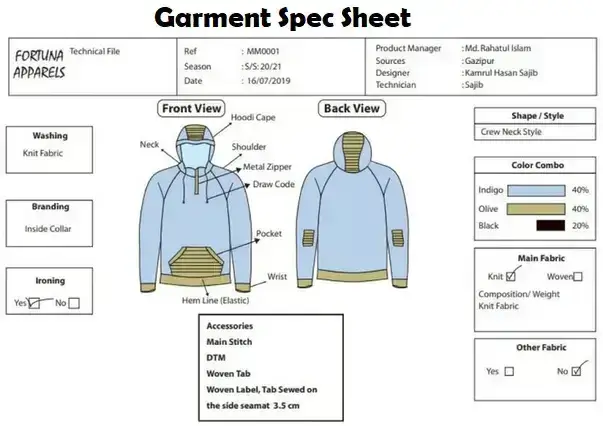
Before creating a spec sheet, you must clearly define all required product details. This includes fabric selection, color combinations, size charts, stitching techniques, and finishing elements.
Moreover, clear planning at this stage prevents confusion during production. As a result, teams can execute designs more efficiently and reduce communication gaps between departments.
GATHERING ACCURATE INFORMATION
After defining the requirements, you should collect all relevant data from designers, product developers, and sourcing teams. Every detail matters, whether it relates to measurements, trims, or construction methods.
In addition, strong communication between teams ensures accuracy and consistency. Consequently, manufacturers can produce garments that meet international quality standards without repeated revisions.
WHY THIS MATTERS FOR GLOBAL BRANDS
International clothing brands must maintain consistency across different markets and production units. Therefore, a detailed garment spec sheet becomes essential for global apparel manufacturing and B2B sourcing.
Furthermore, it helps brands meet buyer expectations, comply with quality standards, and scale production efficiently. As competition increases worldwide, companies that use structured documentation gain a clear advantage in product development and supply chain management.
DRAFTING THE SPEC SHEET
After collecting all required data, you should start drafting the garment spec sheet in a clear and structured format. First, organize all product details, including measurements, materials, stitching methods, and finishing instructions. Moreover, use consistent terminology so that international production teams can easily understand the document.
In addition, structured layouts and visual references improve clarity during large-scale manufacturing. For example, adding measurement charts, diagrams, and labeled sketches helps reduce miscommunication. As a result, production teams can execute designs with greater accuracy and efficiency.
Furthermore, global apparel brands often standardize their spec sheets to maintain consistency across multiple factories. Therefore, a well-drafted spec sheet not only improves production flow but also strengthens supply chain coordination.
REVIEWING AND APPROVING THE SPEC SHEET
Once you complete the initial draft, you must review every detail carefully. Start by verifying measurements, fabric specifications, and construction guidelines. Then, involve product developers, quality assurance teams, and production managers in the review process.
Moreover, cross-functional collaboration helps identify potential issues before production begins. As a result, brands can avoid costly sampling errors and manufacturing delays. After making necessary corrections, finalize and approve the document.
In addition, share the approved spec sheet with all stakeholders, including international vendors and sourcing partners. Consequently, every team follows the same standards, which ensures consistency across global production units.
KEY CONSIDERATIONS BEFORE CREATING A GARMENT SPEC SHEET
Before developing a spec sheet, brands must evaluate several critical factors that influence product success in global markets.
First, define your target audience and market segment. This step helps align product specifications with international fashion trends and customer expectations.
Next, select materials carefully by balancing quality, cost, and sustainability. For instance, many global brands now prefer eco-friendly fabrics to meet environmental standards.
Additionally, maintain accurate sizing systems that comply with international measurement standards. This approach reduces return rates and improves customer satisfaction.
Furthermore, consider production scalability. A well-planned spec sheet should support both small and large manufacturing volumes without compromising quality.
Finally, ensure strong communication between design, sourcing, and production teams. Effective coordination minimizes errors and improves overall workflow efficiency.
Conclusion
A well-developed garment spec sheet serves as a foundation for successful global apparel manufacturing and B2B sourcing. It defines product requirements, improves production accuracy, and ensures consistency across all stages of development.
Moreover, brands that invest in detailed and structured documentation can reduce production risks and improve overall product quality. As competition increases in international markets, companies must adopt efficient systems to stay ahead. Therefore, using a comprehensive garment spec sheet allows brands to scale operations, meet global standards, and build long-term success in the apparel industry.
Frequently Asked Questions
Quality assurance teams actively use spec sheets to verify product accuracy and maintain consistent standards. A detailed spec sheet provides clear guidelines for measurements, materials, and construction details. As a result, QA teams can quickly identify issues and ensure that finished garments meet required quality benchmarks.
In addition, consistent documentation strengthens communication between brands and manufacturers. Therefore, companies can maintain high-quality production standards across multiple global manufacturing locations.
The cost of creating a garment spec sheet depends on design complexity, required detail, and the experience level of the technical designer. Simple products with basic measurements and standard construction require less time, and therefore cost less. However, complex garments with detailed specifications, multiple size ranges, and advanced construction techniques increase both development time and overall cost.
Garment spec sheets support every category of apparel, including dresses, blazers, swimwear, and accessories. Fashion brands and manufacturers use spec sheets to define product details with precision and consistency. As a result, production teams follow clear guidelines across different garment types and maintain uniform quality standards.
Share THis Post on social media
Facebook
LinkedIn
X
WhatsApp
Telegram
Email
Reddit
Pinterest
Tumblr

Custom Clothing Manufcaturer
- Unmatched comfort & durability
- Sustainable production process
- Customizable designs and logos
Most Recent Posts


Custom Clothing Manufcaturer
- Unmatched comfort & durability
- Sustainable production process
- Customizable designs and logos