Blogs
Custom T-Shirts with Low Minimums | Tangibal Sports
Where to Order Custom T-Shirts with Low Minimums Worldwide T-shirts remain one of the most
THE BATTLE OF TWO POPULAR WINTER COATS
Choosing the right winter jacket can make a major difference in comfort, warmth, and everyday performance. Among the most popular options, parkas and puffer jackets stand out for their insulation, versatile designs, and winter-ready construction.
However, each style serves a different purpose. A parka typically offers extended coverage and stronger protection against harsh weather, while a puffer jacket focuses on lightweight insulation and easy movement.
Therefore, clothing brands should consider fabric, insulation, construction, weather resistance, weight, and target customer needs when developing winter outerwear. At Tangibal Sports, we help clothing brands develop custom winter jackets and outerwear according to their product specifications and market requirements.
A parka is a long winter coat designed to provide warmth and protection in cold-weather conditions. Its longer body helps cover more of the wearer, while an insulated construction helps retain body heat.
Many modern parkas also feature protective hoods, adjustable cuffs, multiple pockets, and water-resistant outer fabrics. As a result, parkas work well for winter travel, outdoor activities, commuting, and everyday cold-weather wear.
A puffer jacket uses quilted sections to hold down or synthetic insulation throughout the garment. This construction creates a warm layer while keeping the jacket relatively lightweight.
Moreover, manufacturers can adjust the insulation level, fabric weight, quilting pattern, and fit to suit different climates and customer preferences. Because of this flexibility, puffer jackets remain popular across casualwear, streetwear, outdoor apparel, and active lifestyle collections.
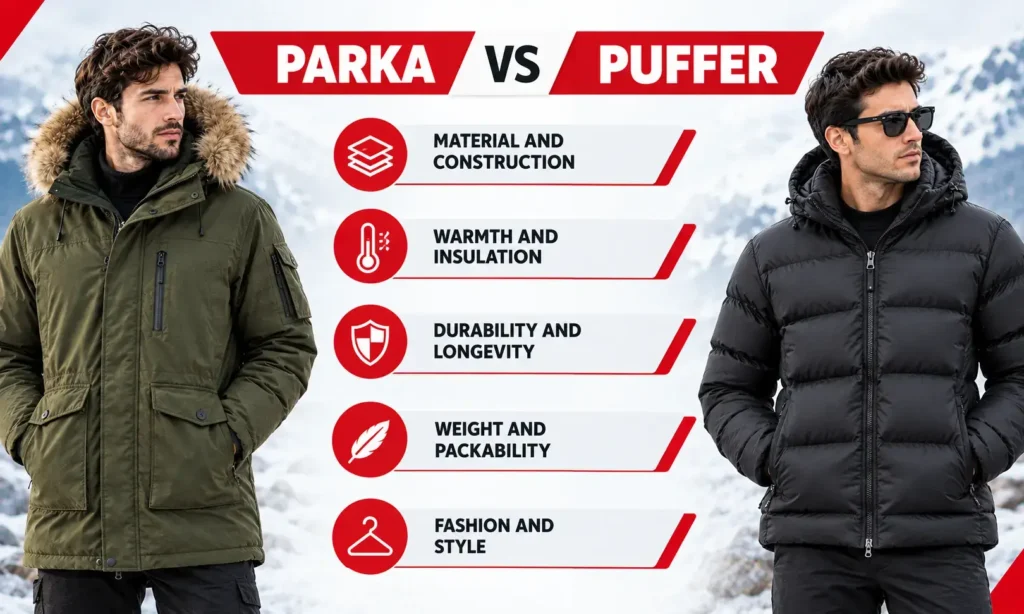
When comparing a parka with a puffer jacket, brands should consider several factors. These include insulation, warmth, weather protection, durability, weight, packability, style, and intended use.
For example, a parka can provide greater coverage in severe winter conditions. On the other hand, a puffer can offer excellent warmth without adding excessive weight.
Parkas commonly combine durable outer fabrics with insulation and protective components. Their longer construction also adds coverage around the hips and upper legs.
Puffer jackets use quilted compartments to distribute down or synthetic insulation across the body. Therefore, the quilting pattern plays an important role in both appearance and thermal performance.
Both jacket styles can provide excellent warmth when manufacturers select suitable insulation and fabric combinations. However, parkas often provide additional protection through their longer length, hood, and weather-resistant construction.
Meanwhile, high-quality puffers can deliver an excellent warmth-to-weight ratio. Consequently, they work well for customers who want warmth without a bulky winter coat.
Durability depends on the outer fabric, stitching, insulation, zippers, and overall construction. A well-constructed parka can handle demanding outdoor conditions, while a quality puffer can also provide long-term performance with durable materials and strong stitching.
Therefore, brands should evaluate fabric performance and construction quality before placing bulk winter jacket orders.
Puffer jackets generally offer excellent packability because manufacturers can use lightweight fabrics and insulation. As a result, customers can easily carry them during travel and outdoor activities.
Parkas usually include more layers and protective features, so they can feel heavier. However, that additional construction can provide greater coverage and weather protection.
Parkas create a classic outdoor appearance and work well with casual winter outfits. In contrast, puffer jackets offer a sporty and contemporary look that suits streetwear, casualwear, travel, and active lifestyles.
For brands developing seasonal collections, both styles can support different customer segments and product concepts.
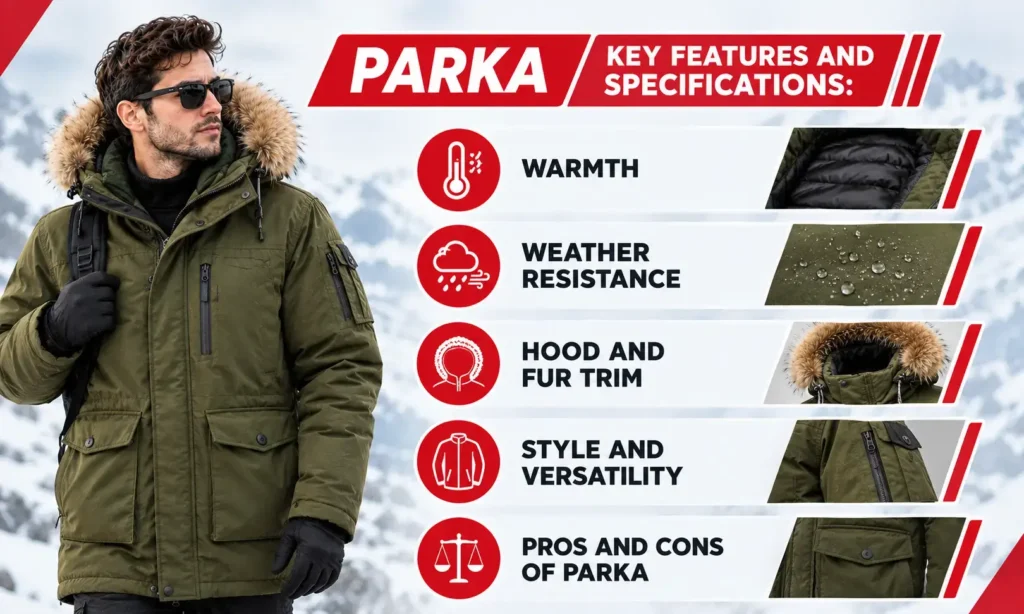
Parkas combine insulation, extended coverage, and protective construction to help customers stay comfortable during cold weather. Additionally, brands can customize insulation levels according to the intended climate and product category.
Many parkas use water-resistant or weather-resistant fabrics to help protect against wind, snow, and light rain. Therefore, they can suit customers who spend significant time outdoors during winter.
A hood provides additional protection around the head and neck. Furthermore, brands can choose removable faux-fur trims, adjustable hoods, or minimal hood designs according to their target market.
Parkas combine practical winter protection with a versatile appearance. Consequently, customers can wear them for commuting, travel, outdoor activities, and everyday winter styling.
Pros:
Cons:
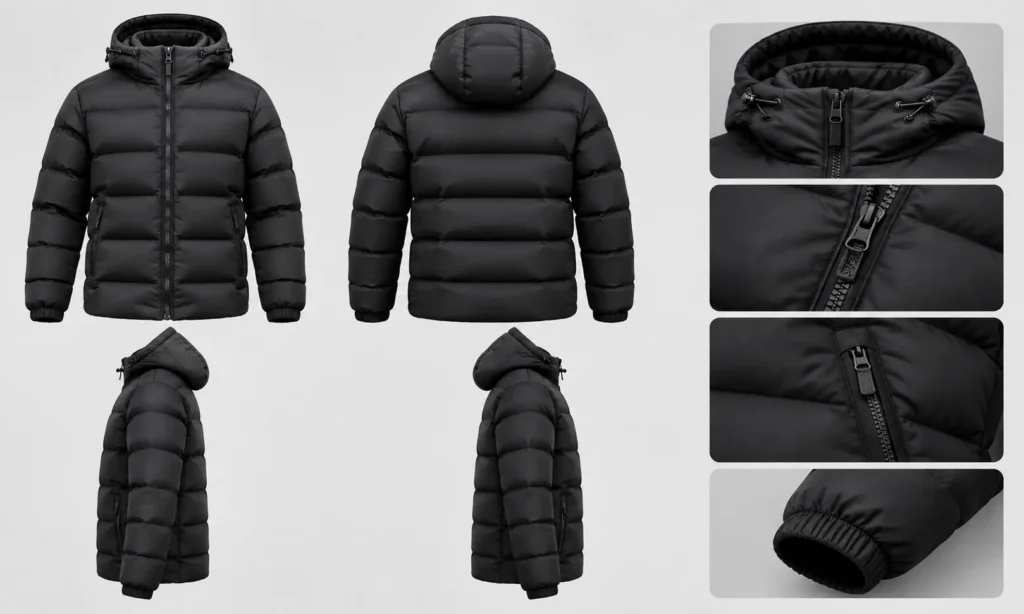
Puffer jackets provide warmth while maintaining a relatively lightweight construction. Moreover, their compact design makes them convenient for travel, commuting, and everyday winter use.
Manufacturers can use down or synthetic insulation to achieve different levels of warmth. Therefore, brands can develop puffer jackets for mild, moderate, or colder climates.
Puffer jackets fit naturally into casualwear, streetwear, outdoor clothing, and active lifestyle collections. Their modern silhouette also gives brands plenty of opportunities for custom colors, quilting patterns, logos, and branding details.
Pros:
Cons:
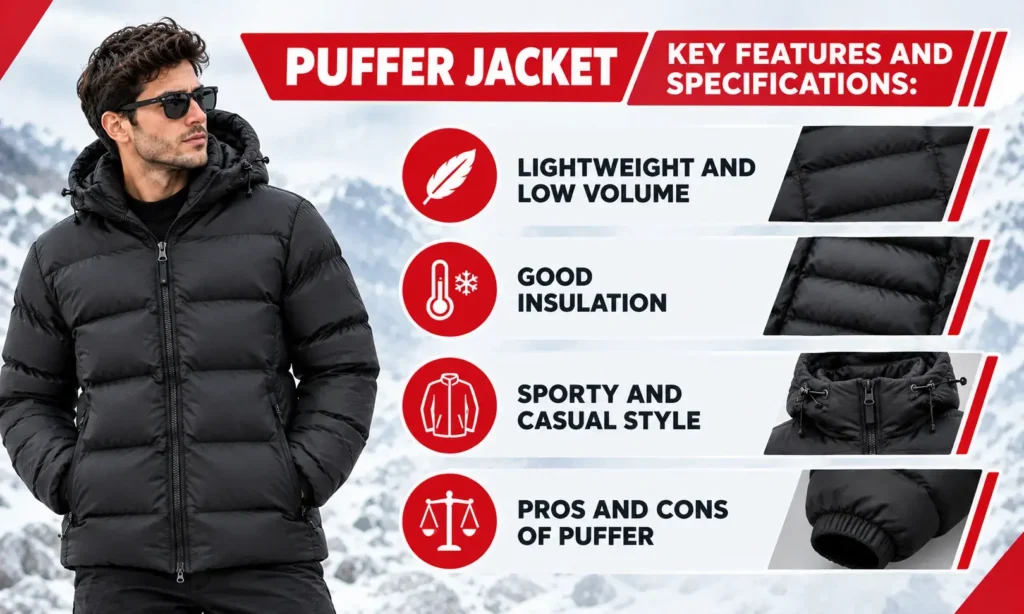
The right option depends on the target market, climate, product purpose, budget, and desired design.
For extremely cold or wet environments, a parka can provide additional coverage and protection. Meanwhile, a puffer can offer lightweight warmth for everyday winter collections.
For clothing brands, manufacturers can also customize both jacket styles with different fabrics, insulation levels, colors, trims, labels, zippers, and branding details.
Tangibal Sports works with international clothing brands and businesses to develop custom outerwear and winter apparel according to specific product requirements. Our manufacturing approach supports private-label and custom clothing programs for brands targeting customers in markets worldwide.
Both parkas and puffer jackets offer valuable benefits for winter apparel collections. Parkas focus on extended coverage and weather protection, while puffers emphasize lightweight warmth, mobility, and packability.
Ultimately, brands should match the jacket style with their target climate, customer expectations, product positioning, and performance requirements. By selecting the right materials and construction, businesses can create winter outerwear that combines comfort, durability, functionality, and modern design.
Tangibal Sports can help brands turn their winter outerwear concepts into custom manufactured products for international markets.
Parkas often provide more overall warmth because their longer design offers greater body coverage and their construction can include substantial insulation. However, a high-quality puffer jacket can also deliver excellent warmth, especially when manufacturers use effective down or synthetic insulation. Therefore, the best option depends on the climate, insulation level, and jacket construction.
Many puffer jackets use water-resistant outer fabrics or protective finishes that help repel light rain and snow. However, water resistance varies by fabric and construction. Therefore, brands should select suitable shell materials and finishes when they plan to develop puffers for wet or snowy climates.
A parka can offer excellent value when customers need extended coverage, warmth, and protection during cold weather. Moreover, brands can customize parkas with different insulation levels, fabrics, hoods, pockets, and trims. Tangibal Sports can help clothing brands develop custom parkas and winter outerwear according to their product specifications and target markets.
Yes, many lightweight puffer jackets can compress easily for travel, especially when manufacturers use lightweight insulation and flexible outer fabrics. As a result, customers can pack them conveniently in luggage or travel bags. However, brands should select the insulation and construction carefully to balance packability with warmth and durability.

Custom Clothing Manufcaturer
Where to Order Custom T-Shirts with Low Minimums Worldwide T-shirts remain one of the most
How Much Does It Cost to Make a Hoodie? A Complete Manufacturing Cost Guide A
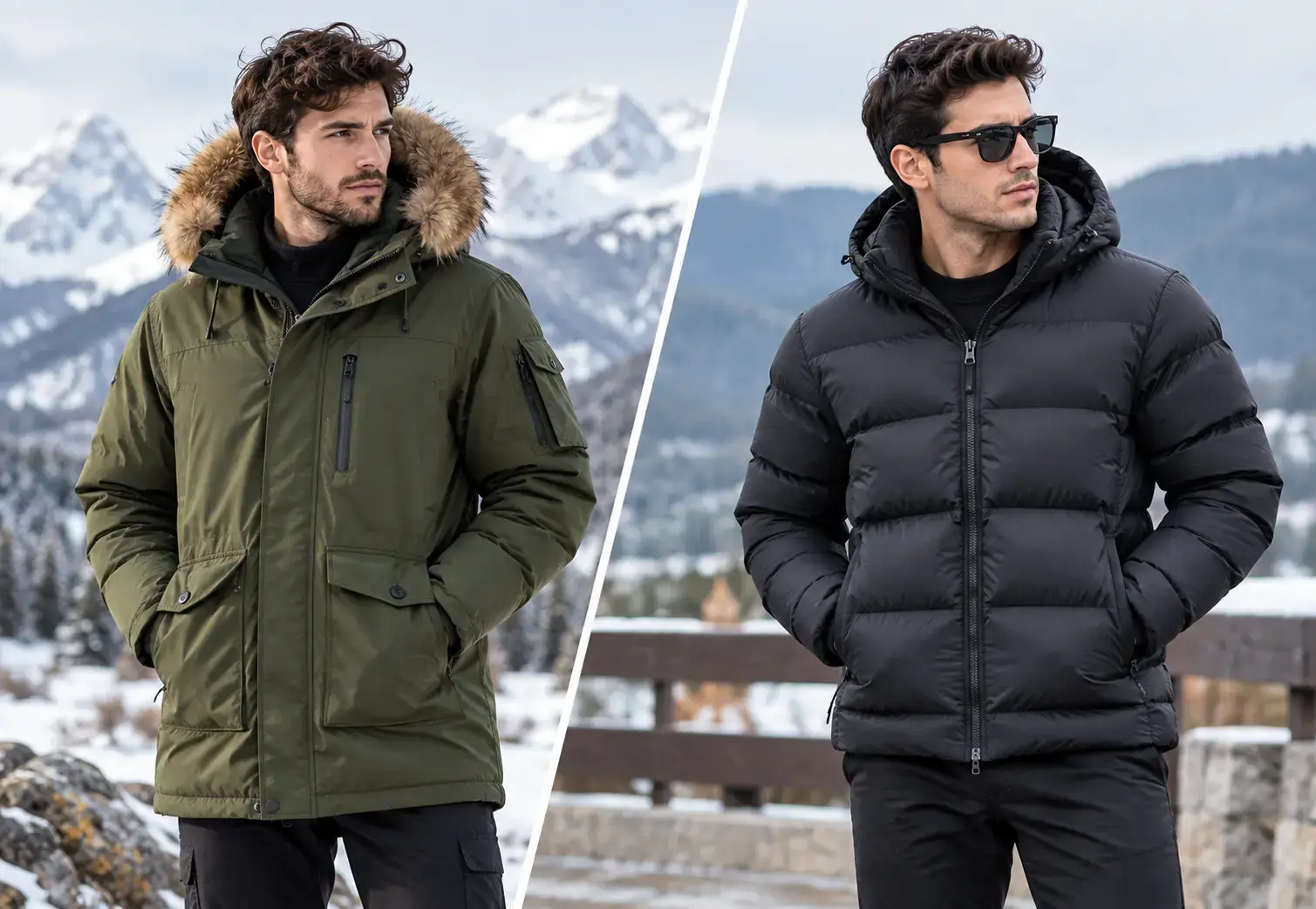
PARKA VS PUFFER JACKET: WHICH WINTER COAT SHOULD YOU CHOOSE? THE BATTLE OF TWO POPULAR
Sustainable Clothing Manufacturing: A Complete Guide to Fashion & Eco-Friendly Production EXPLORING ETHICAL SOURCING AND

Custom Clothing Manufcaturer
WhatsApp us